About: The Science of Multiplet
If you can solve this…
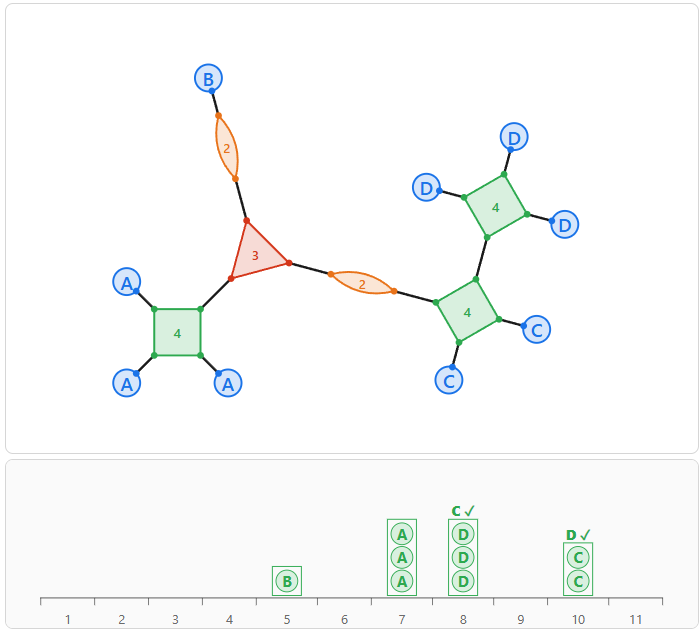
…you could solve this.
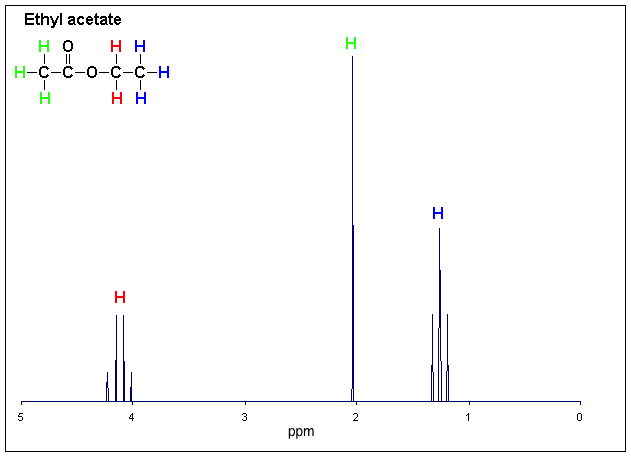
What you're looking at
The second picture is a real NMR (nuclear magnetic resonance) measurement of ethyl acetate. NMR is the technique chemists use to figure out what molecules look like by reading the signals they give off in a strong magnetic field.
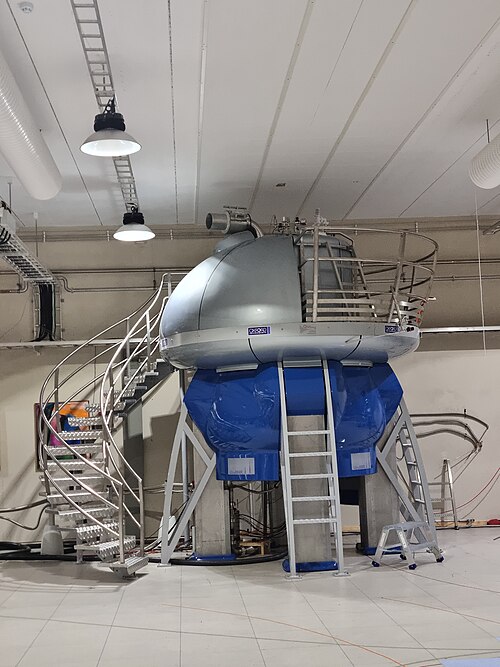
The result is a number line dotted with peaks, and the chemist's job is to work backward from those peaks to the structure that produced them: which pieces connect to which, where the neighbors are, what the whole molecule must look like. That's the same loop Multiplet asks of you — read the peaks, deduce the connections, build the structure.
Reading the peaks
Both pictures answer the same questions.
Where does each peak sit on the line?
That's a circle's position, which depends on the identity of surrounding shapes.
It depends on what surrounds each atom: what it's attached to, and what those atoms are attached to.
The number line position is called chemical shift in NMR.
How spiky is each peak?
The letters above each group tell you how many neighbors a circle has and what they are.
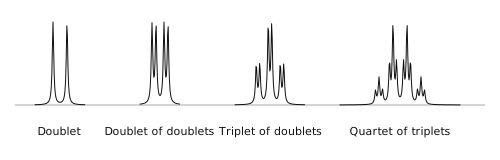
Those same neighbors split the peak into its characteristic spiky shape, telling the chemist where the neighboring atoms sit in the molecule.
What are the shapes?
Each shape has a fixed number of connections.
Real atoms behave the same way; carbon makes four bonds like a square, oxygen two like a lens, nitrogen three like a triangle.
The puzzle's shapes stand in for atoms.
Real-world measurements

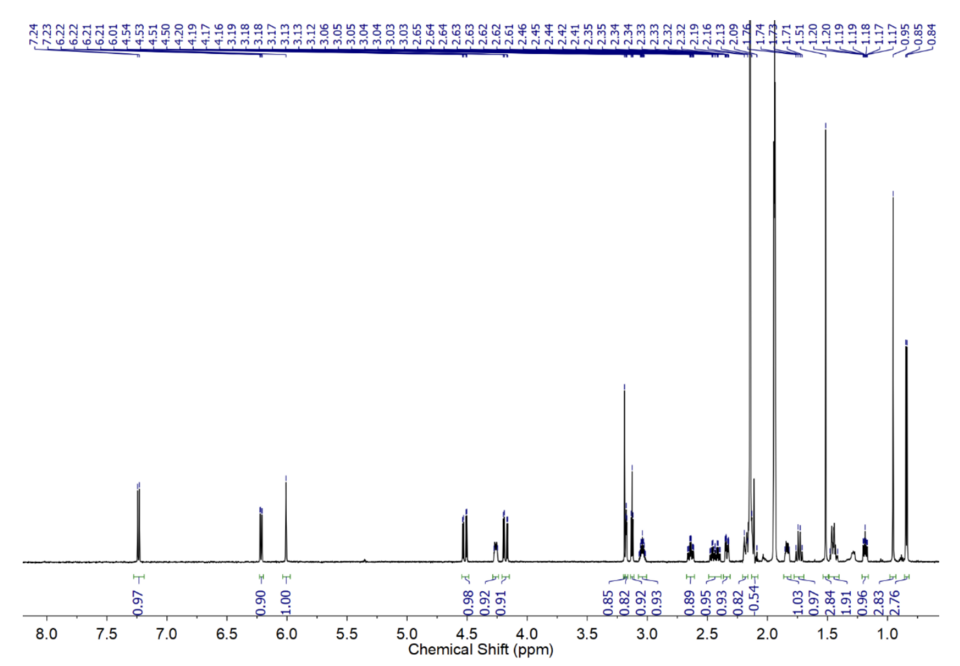
Real measurements are dense. Dozens of peaks, many of them overlapping, each carrying a clue about a molecule that may have hundreds of atoms. A chemist might spend an afternoon teasing one structure out of a single measurement, and a career learning to do it well. Every drug in your medicine cabinet, every new material, every suspect compound in a forensics lab — at some point, someone sat down with a plot like this one and worked backward to the structure. Multiplet may look like a friendlier version, with its colorful arrays of shapes, but underneath it runs on the same logic and deductive reasoning that scientists around the world use every day to map the molecular world.